Complete renewal of the Asturcón Network's FTTH electronics: the 20 primary nodes move from Alcatel 7342 and Ericsson BLM 1500 OLTs to a new dual GPON/XGS-PON generation, with new routers, a new management system and an orderly migration of every user.
Data, figures and drawings taken from the pliego de condiciones técnicas (file CON 06/2025, GITPA) · Potru is an independent project, not affiliated with GIT or the Principality of Asturias
The network's full chain: ONT → passive access network (1:16 and 1:4 splitters) → primary node with OLT → trunk network → operator access point. Switch between the current and renewed network, and click each element to learn its role.
The network reaches 24 of Asturias's 78 municipalities (concejos). Solid circles are primary nodes (with an OLT to renew); hollow ones are secondary nodes: sites with no electronics, only passive optical splitters hung off a primary node by fibre — the renewal doesn't touch them. The small dots are the towns served from each node. Click any node for its record, or start the guided tour.
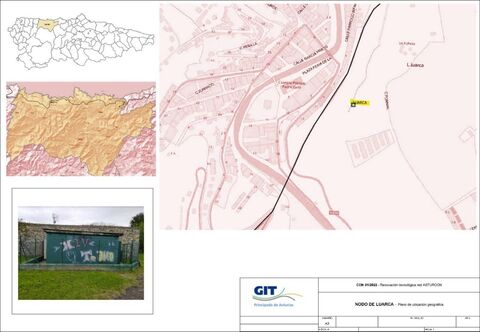
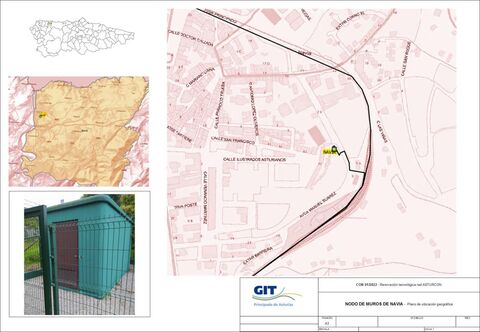
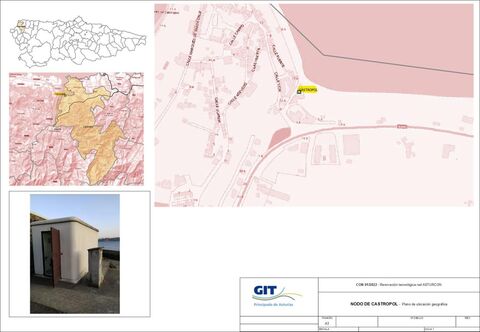
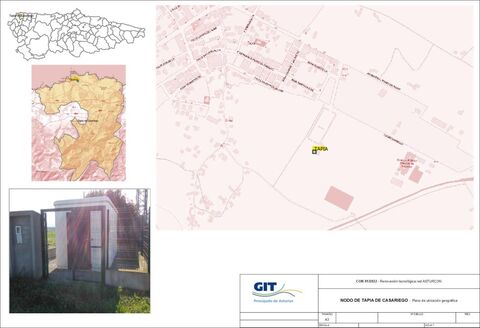
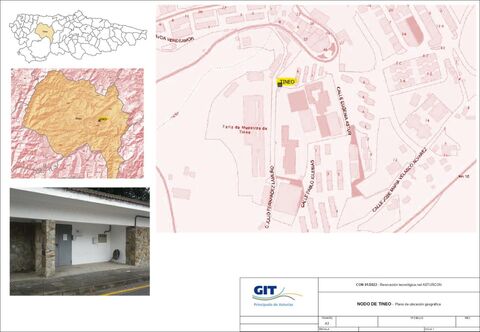
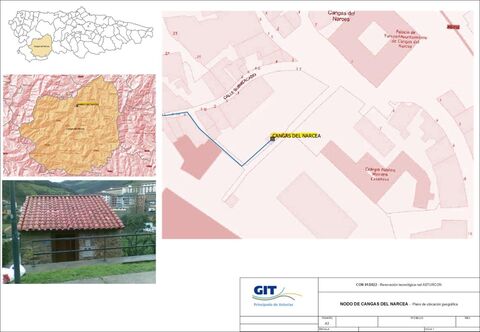
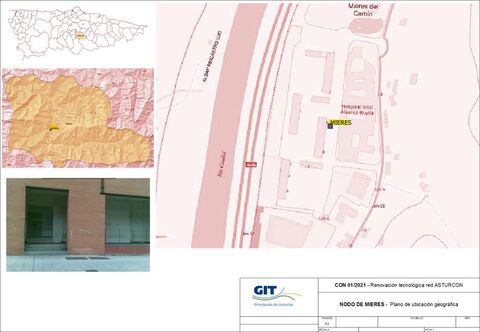
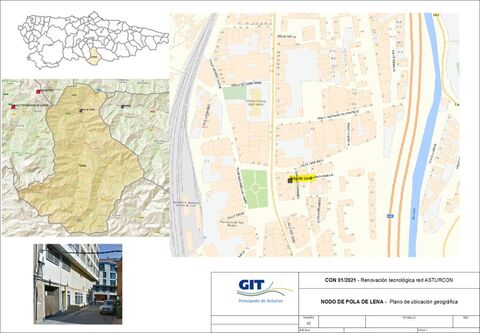
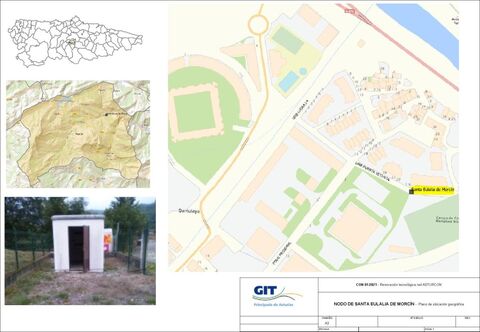
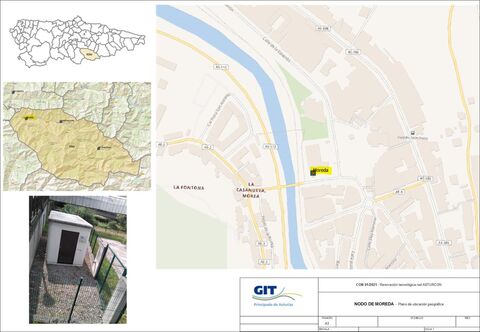
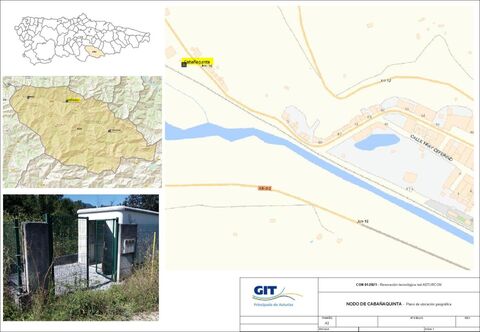
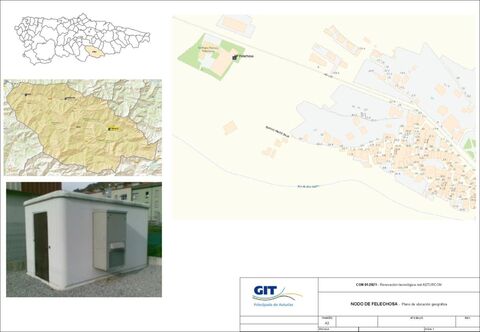
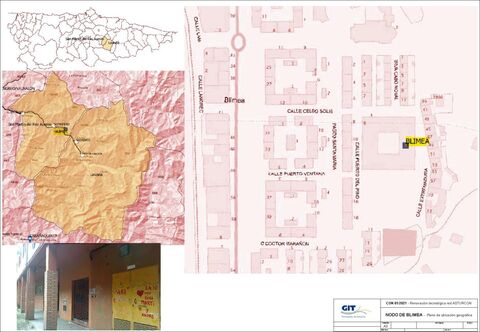
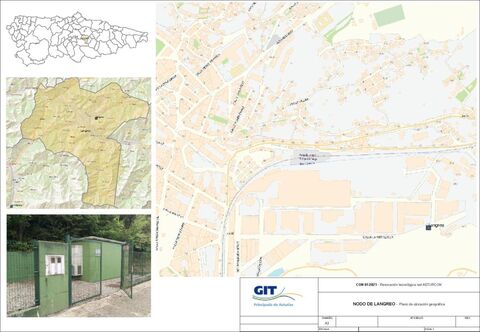
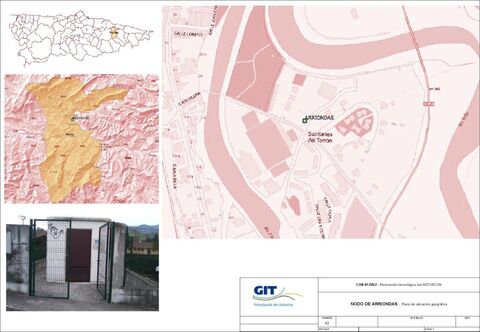
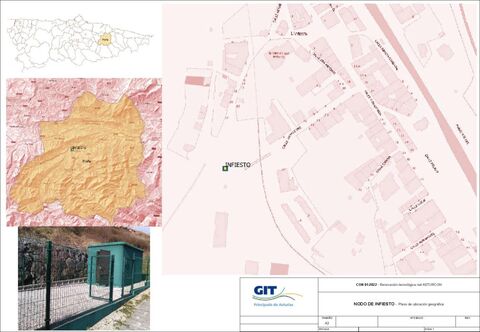
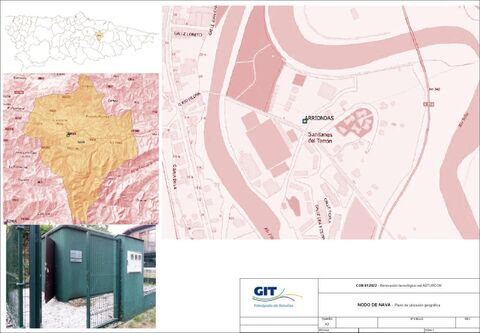
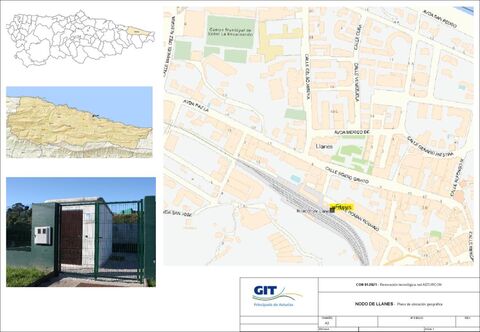
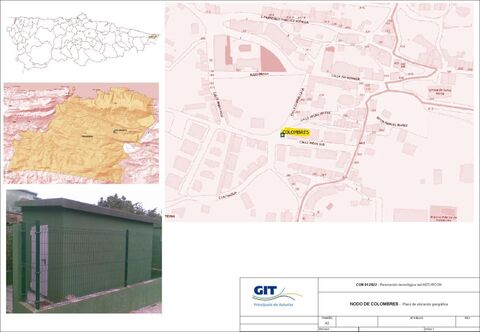
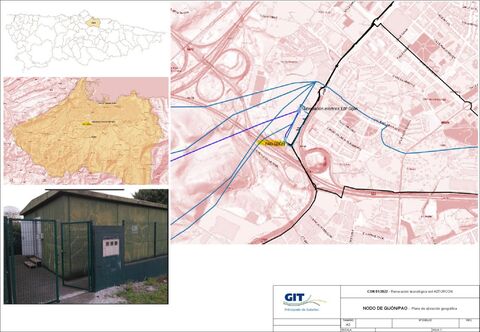
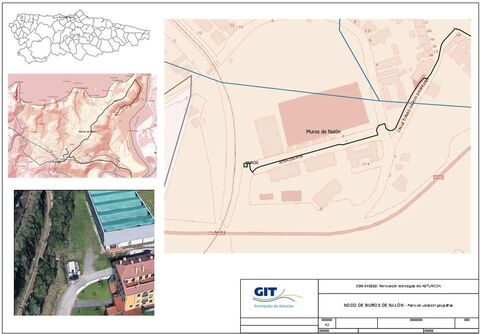
Each record gathers the pliego's data: GIT's official location plan, the OLT equipment in service, the ONTs in service, and the planned renewal weeks (initial planning, dated from contract signature). The bar at the foot of each card places its window within Phase 2's 46 weeks.
A public, neutral, wholesale FTTH network, operated by GIT since 2004 to bring broadband where private operators don't deploy. Retail operators run their services (HSI, TVoIP, VoD, VoIP, RF CATV and POTS telephony) over the same ONT, with transparent connectivity through to the PAO.
Active terminal in the home. Connects the operator's services to the drop fibre.
Primary and secondary passive network. Final optical split 1×4×16 = 64 users/fibre (Cangas del Narcea: 1:32). 806 PON networks.
20 nodes with an Alcatel 7342 (R4.8.13) or Ericsson BLM 1500 (R8.4.0) OLT, CATV injection, DC power, batteries and transmission.
No electronics: optical splitters hung off a primary node by fibre. The general pliego cites 5, but the area-by-area records detail 9: Vegadeo, La Caridad and Soto del Barco (W.), Cabranes and Villamayor (SE.), and El Entrego, Sotrondio, Barredos and Pola de Laviana (Nalón).
High-capacity own fibre or leased fibre with CWDM Transmode (5800 / 8133 / 8140) to the PAO.
Alcatel 7750SR-7 router at 100% occupancy. Operator cages, POTS V5.2 gateways and auxiliary equipment.
2.5 Gbps downstream · 1.2 Gbps upstream · shared
One fibre leaves the OLT and a passive splitter divides it among up to 64 homes. The bandwidth belongs to the group, not to each house.
10 Gbps downstream · 10 Gbps upstream · shared
Same fibre, same splitters, same ducting. What changes is the electronics at both ends: the node's OLT and the living room's ONT.
The two generations coexist on the same fibre because they work on different wavelengths. That's why the migration can happen node by node and user by user, without ever switching the network off: while one neighbour's ONT has already been swapped, the one next door keeps running GPON on the very same cable.
⚠ This figure doesn't come from the pliego. The bands are the ones set by the ITU-T G.984.2 (GPON) and G.9807.1 (XGS-PON) standards; RF video, by G.984.5. Pliego CON 06/2025 names the technologies, not necessarily their wavelengths. It's labelled as a standard, not as data from the file.
A closed-scope, turnkey fixed part plus a variable part activated as needed. Each action lists the nodes it affects: click a name to open its record.
To migrate users whose ONT lacks sufficient capacity (e.g. the Alcatel I-221E-A, limited to 100 Mbps). Delivered node by node, at the time of its migration.
To replace ONTs incompatible with the new equipment, per each node's migration schedule.
The first symmetric 10 Gbps terminals compatible with the new platform.
Network expansion into new coverage areas: number, sizing and location as needed.
Growth of the equipment installed under the fixed part to absorb expansions of the renewed network.
Usage licences if the solution requires them, and a repair/replacement service for faulty elements.
Nothing is cut over until every conformity test passes, and every node has a rollback procedure to the previous situation.
Joint site survey, installation of the 2 routers (PAO Gijón and Mieres), a test node at GIT Oviedo, new element managers and OSS adaptation. Compatibility tests with the ONTs in service, conformity of the new GPON and XGS-PON ONTs and of the combined GPON/XGS-PON setup. Training for up to 15 people (min. 25 h). Passing every test is a prerequisite to continue.
Installation of the new equipment node by node, starting with Muros de Nalón as the pilot and continuing with each area's lead node. GIT migrates the users; the contractor supplies the replacement GPON ONTs and spares. Duration per node depends on the ONTs in service:
Activation of the variable part: usage licences, fault repair and replacement service, up to 5 new nodes, capacity expansions, level-3 technical consultation and advice, and supply of additional GPON ONTs and XGS-PON ONTs.